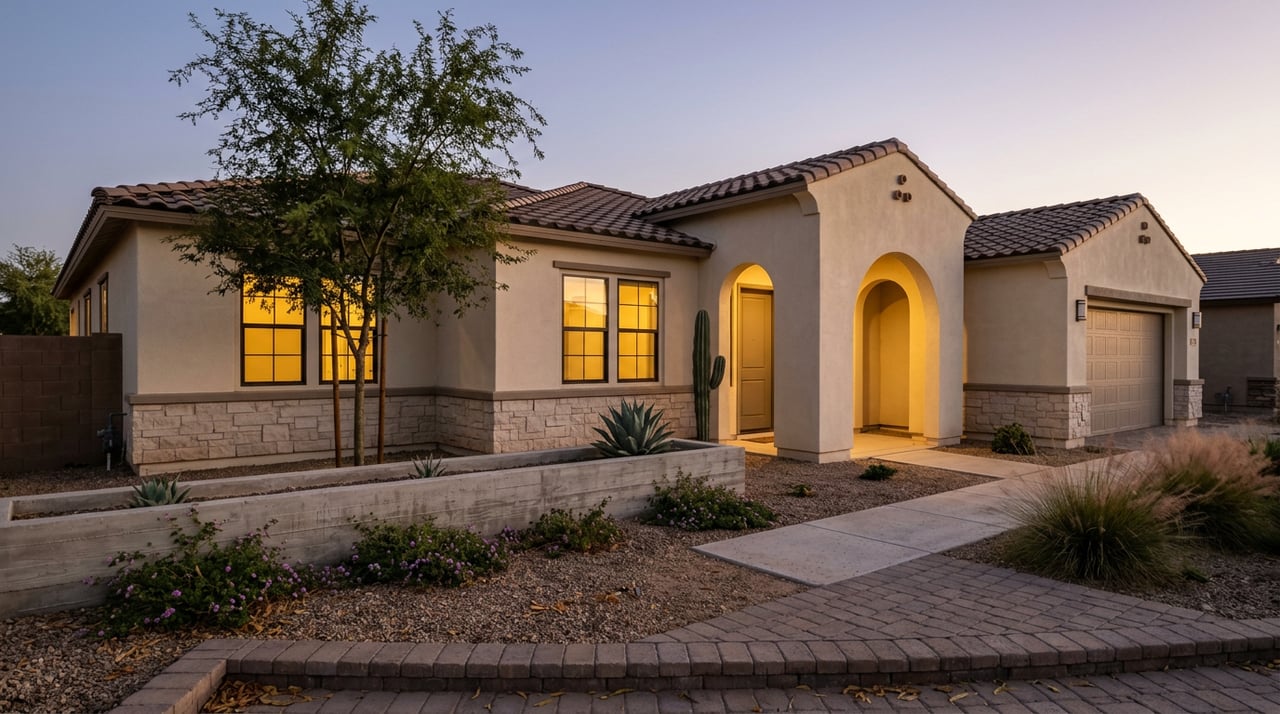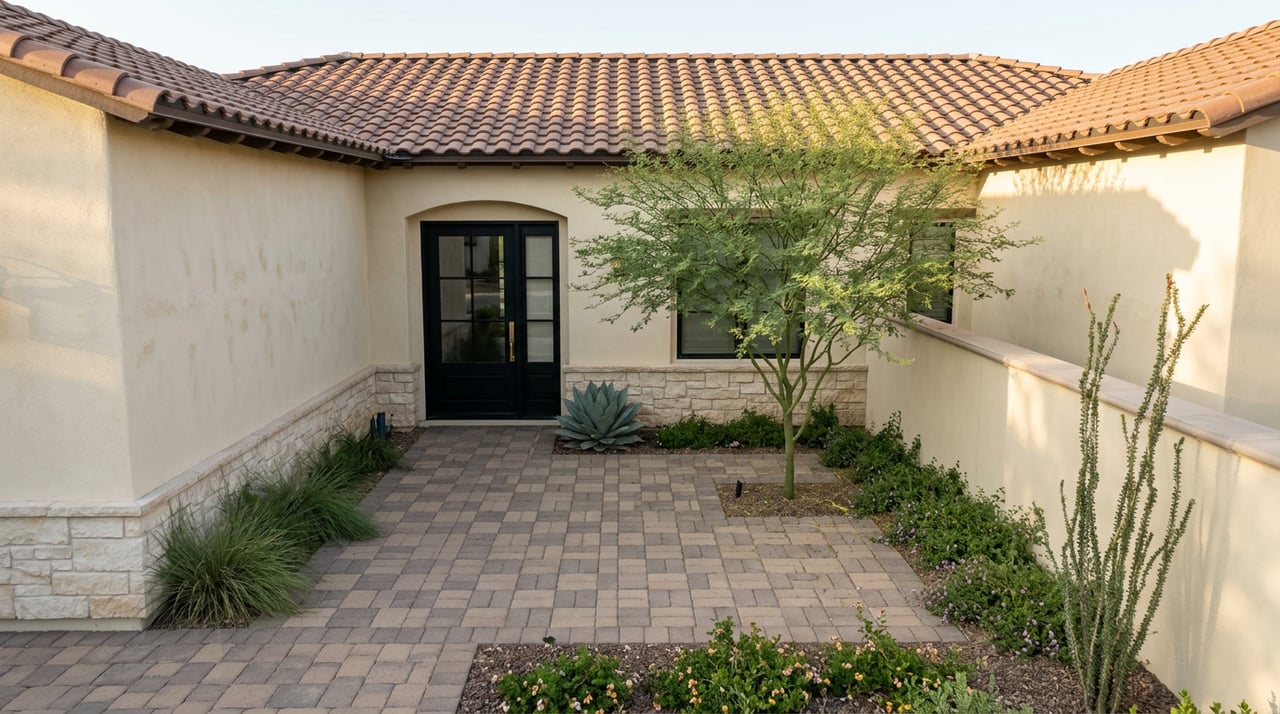
Fulton Ranch's homeowners association has an update posted on its own site right now that most buyers touring the community will never see. An engineering firm called Engineering Support Services inspected the walls separating individual lots from common areas, from public streets, and from each other. Some of those walls, the report found, are structurally unsound. Replacement work along Chandler Heights is close to finished. Temporary shoring is holding up sections along Lake Drive while the rest of the fix gets sorted out.
Here's the detail that matters if you're comparing homes in south Chandler's lake communities: under Fulton Ranch's CC&Rs, Section 7.6 puts the cost of replacing those walls on the individual lot owner, not the association. The HOA has said it's looking at ways to help owners with the process, but as of this writing, that's not a guarantee. It's a disclosure, not a solution.
This is the piece that doesn't show up in a listing photo or a walk-through, and it points to something worth understanding before you fall for a lake view: in Chandler's two flagship waterfront master plans, Ocotillo and Fulton Ranch, the price you pay has less to do with how close you are to the water and more to do with which decade of construction you're buying into and what that decade's HOA structure actually covers.
The Same Lake, Five Different Decades
Ocotillo isn't one price point. It's a 1,900-acre master plan built around a 162-acre interconnected lake system with 17 miles of shoreline, and it's been adding neighborhoods in phases since 1986. Walk from one enclave to the next and you're walking through nearly 40 years of Chandler's building history, each one with its own dues structure and its own list of what those dues actually fund.
Here's how that plays out in practice, based on the enclaves that make up the master plan:
| Community | Built | Monthly HOA Dues | Recent Price Range | What the Dues Cover |
|---|---|---|---|---|
| Echelon at Ocotillo | 2016–2021 | $187–193 | $460,000–$1.1M | Heated pools, spas, outdoor fireplaces, dedicated play areas |
| The Waters at Ocotillo | Since 2013 | ~$140 combined | Waterfront lots, 2,504–4,435 sq ft | 24-hour fitness centers, resort pools, direct lake access |
| Ocotillo Lakes | Varies | Not specified | $635,000–$1,349,000 | Direct lake access, limited resale inventory |
| Legend at Ocotillo | 1995–1997 | $54–86 | Median around $775,000 | Established landscaping, older amenity package |
| Cottonwood Springs | 1988–1993 | $18–111 | Median around $718,000 | Horse-facility designation, RV parking allowed |
| Harbour Club | 1987–1998 | Not specified | Median around $545,000 | Direct lake access, mature grounds |
| Corona Del Mar | 1995–1998 | $63–93 | ~$265 per square foot | Entry-level pricing within the master plan |
Price ranges and medians reflect sales and listings reported earlier this year for each enclave. HOA dues are the more stable figure since they change far less often than a sale price.
Look at what that table is actually telling you. Echelon, the newest section, charges the highest dues in the master plan and has a median price to match, but that money is buying a resort-style amenity package built to Santa Barbara-style specs less than a decade old. Cottonwood Springs, one of the oldest sections, charges a fraction of that and, based on sales reported earlier this year, still commands a median price close to $718,000, because what it's selling is a horse-facility designation and RV parking that newer HOAs simply don't allow. Harbour Club, also from the late 1980s and early 1990s, showed a lower median in that same reporting despite having direct lake access, which tells you that vintage and floor plan size are doing more work in the price than water frontage alone.
The lake itself, worth noting, isn't drawing on Arizona's groundwater supply. The Ocotillo Community Association's system runs on reclaimed and reprocessed water from the City of Chandler, pumped through a dedicated system the association contracts out for maintenance. That's a genuine amenity, not a marketing gloss, and it's one reason the lake system has held up as a selling point for four decades. But it also means the "waterfront" label covers a wide range of actual living experiences, from a 1988 ranch home with horse rights to a 2021 condo with a rooftop fitness center, and the sticker price reflects which of those you're buying far more than it reflects the water outside your window.
Fulton Ranch Tells the Other Half of the Story
If Ocotillo shows how price splits by vintage, Fulton Ranch shows what that split can cost you later.
Fulton Ranch is a 520-acre master plan built around a 28-acre lake system with nine interconnected lakes, organized into enclaves like Serenity, Shoreline, and The Island. More than a thousand homes sit inside it, ranging from the mid-$500,000s to over $2 million. The HOA runs a two-tier structure, a master association layered over sub-associations for individual enclaves, with quarterly assessments funding lake maintenance and general upkeep.
That structure works fine until something like a wall inspection turns up a problem the master budget wasn't built to absorb. Fulton Ranch's CC&Rs draw a clear line: the association funds and maintains the lakes, the paths, and the common landscaping, but the walls between your lot and your neighbor's, between your lot and the street, and between your lot and the association's own common areas are your responsibility to replace when they fail. That's not unusual for Arizona HOAs generally. Arizona law lets special assessments and individual maintenance obligations live inside an association's own governing documents rather than a single statewide cap, which means the actual exposure varies from one CC&R to the next. What makes Fulton Ranch relevant right now is that this isn't a hypothetical risk. It's an active repair project, with a named engineering firm's findings currently posted on the HOA's own site.
If you're comparing a home in an older enclave against one in a newer section, that's the question worth asking before you assume lower dues equal lower cost. A community charging $18 to $111 a month in Cottonwood Springs, or one running a two-tier structure like Fulton Ranch, may be pricing lake maintenance and party-wall liability very differently than a newer section paying $187 to $193 a month for a fully bundled amenity package. Low dues can mean an older reserve fund that hasn't caught up to an aging structure. Higher dues can mean the capital repairs are already priced in.
Why the Premium Exists at All
None of this changes why people pay for it. Chandler's Price Corridor along Loop 101 and Loop 202 employs more than 40,000 workers at companies including Intel, Wells Fargo, Bank of America, Northrop Grumman, Microchip Technology, and Dignity Health, and Ocotillo and Fulton Ranch sit close enough to that corridor that tech workers and professionals routinely pay a premium for the shorter commute. That demand is real and it's durable. It's just not the whole explanation for what you're paying, which is the part a listing sheet won't spell out.
As of early September 2026, list prices across Chandler as a whole were running somewhere between $585,000 and $625,000 depending on the data source, with homes spending a median of around 60 days on the market that same month. Set that next to Ocotillo's Legend section, which climbed from a median of $661,500 in 2021 to $774,000 in 2024, and the gap between a citywide median and a lake-community median becomes a story about scarcity and vintage, not just amenities.
What This Means If You're Comparing Ocotillo and Fulton Ranch
Ask for the reserve study before you fall for the view. A well-funded reserve tells you whether the HOA has actually planned for the next roof, wall, or pump system, or whether it's been keeping dues artificially low and hoping nothing breaks. Ask specifically whether the CC&Rs assign wall or fence replacement to the association or to the individual owner, since that single clause can turn a low monthly HOA fee into a five-figure surprise. And compare the enclave you're touring against its neighbors inside the same master plan, not just against the citywide median, because inside Ocotillo alone the difference between Echelon and Cottonwood Springs is bigger than the difference between Chandler and some neighboring cities.
A Few Questions We Hear Often
Does every home inside Ocotillo share one HOA? No. Ocotillo operates under an overarching Community Association, but individual enclaves like Echelon, Legend, and Cottonwood Springs each carry their own dues structure and, in some cases, their own additional rules layered on top of the master association's.
Is Fulton Ranch's wall issue unique to that community? The specific finding is Fulton Ranch's own, but the underlying setup, where CC&Rs assign party-wall or right-of-way wall replacement to individual owners rather than the HOA, is common across Arizona master-planned communities. It's worth checking in any community you're considering, not just this one.
How do I find out if a specific home carries this kind of liability? The CC&Rs and the HOA's reserve study are both public documents you're entitled to request during a purchase contract's due diligence period. Ask your agent to pull them early rather than late.
If you're weighing a lake-community purchase in south Chandler and want someone to walk the reserve study and CC&Rs with you before you write an offer, Martin and Hali can help you get the full picture. Reach out for a free home valuation and a straight read on what a specific address is really going to cost you.